
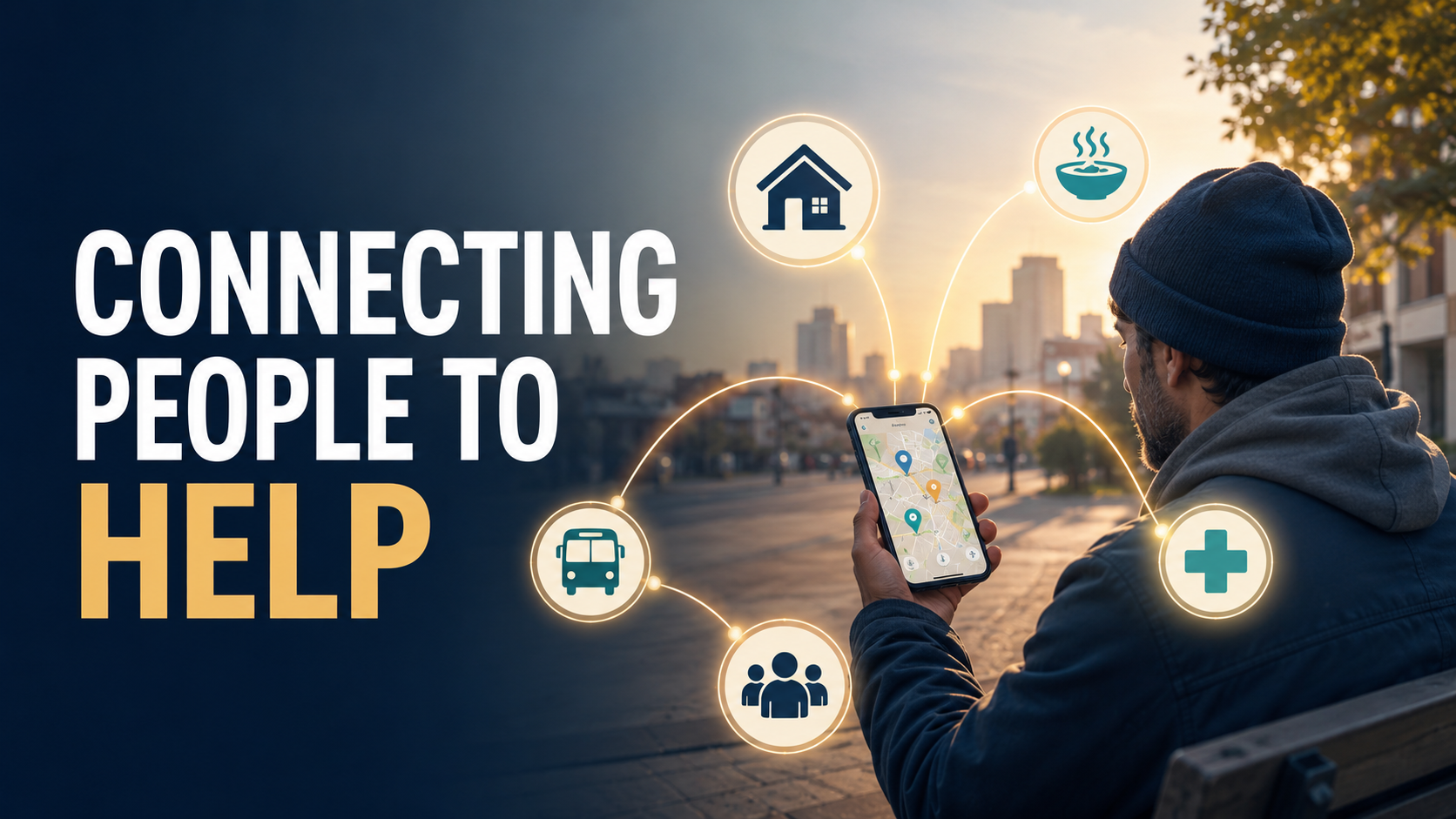
Why I volunteered with ShelterApp and why I hope you will consider helping, too.
One of the most frustrating realities of homelessness is that help often exists, but the people who need it cannot always find it.
A shelter may have an available bed. A food pantry may be serving meals nearby. A nonprofit may offer transportation, mental health care, clothing, job assistance, or help replacing identification.
But that information is often scattered across outdated directories, websites, flyers, and phone numbers that lead nowhere. For someone experiencing homelessness, finding help can become a full-time job. That is why I was excited to discover ShelterApp.
What Is ShelterApp?
ShelterApp is an all-volunteer nonprofit that uses web and mobile technology to connect people experiencing homelessness, low-income families, and young people in crisis with services and resources.
Users can search through a list or map, filter services, see what is currently open, find contact information, get transit directions, and connect with participating providers.
Resources include:
- Shelter, housing, food, and basic-needs assistance
- Services for homeless and runaway youth
- LGBTQ+ advocacy and support
- National crisis and emotional-support hotlines
- An AI-powered chatbot that helps users find services
Service providers can also add and update their programs.
ShelterApp is available on the web, Apple App Store, and Google Play Store. According to the organization, it has already reached more than 467,000 downloads and web users.
Each number represents someone looking for food, safety, shelter, support, or a path forward.
This Is the DNA of Connect the Dots
ShelterApp immediately resonated with me because connecting people to existing services is in the DNA of Connect the Dots.
The idea behind Connect the Dots is simple:
On one side are people who need help. On the other are organizations, resources, and individuals ready to provide it.
Too often, those two sides never connect.
My goal has always been to identify effective local solutions and help people access the resources that already exist. When a needed service does not exist, we should ask what it will take to create it.
We do not always need another program. Sometimes, we need a better way to connect people with the programs already available.
That is exactly what ShelterApp is doing.
Why I Volunteered
ShelterApp is powered by volunteers, and I recently volunteered to support its mission.
You can contribute a skill, improve a resource listing, connect ShelterApp with a local provider, or help with technology, communications, outreach, fundraising, research, or administration.
- You can also help more people discover that the app exists.
You Can Help, Too
If you are looking for a way to use your skills to help others, visit ShelterApp.org and explore its volunteer opportunities.
If volunteering is not possible, you can still help:
- Download and share the app.
- Introduce it to shelters, libraries, churches, outreach groups, and service providers.
- Encourage local organizations to add or update their information.
- Support the organization financially if you are able.
A resource can only help people if they know it exists—and can trust the information when they need it.
Let’s Connect More Dots
I created Connect the Dots because I believe many solutions to homelessness already exist. The problem is that they are often fragmented, difficult to navigate, or disconnected from the people who need them most.
ShelterApp is helping close that gap. That is why I volunteered.
I hope you will consider joining me.